PPF innovations are reshaping vehicle protection as the market reaches an estimated $890.2 million by 2034, with a compound annual growth rate of 6.5%. The just need for PPF is expected to grow by about 10% each year over the next five years. Manufacturers expand the possibilities with self-healing technology and smart coatings. What a world of accessible self-tracking tools where paint protection films do more than shield your car. They adapt and clean themselves while responding to environmental changes. This piece explores the state-of-the-art innovations in PPF and what the future of PPF holds for your vehicle’s protection.
What is PPF and Why Innovation Matters
Simple function of paint protection film
Paint protection film consists of a transparent thermoplastic urethane layer applied directly to your vehicle’s exterior surfaces. This material creates an invisible barrier between your paint and the hazards you encounter daily. The film started as a military-grade solution that protected helicopter blades from debris during flight operations, then made its way into civilian automotive use in the late 1980s under names like “clear bra.”
The magic happens through multi-layer construction. Modern PPF features a thick, flexible top layer that absorbs impacts from rocks and road debris and prevents chips and scratches from reaching your paint beneath. Many films now incorporate self-healing technology within this top layer. Heat from sunlight or warm water triggers the film to repair itself and return to a smooth surface when minor scratches or swirl marks appear.
PPF shields your vehicle from bug splatter, bird droppings, road grime, and the corrosive effects of salt beyond impact protection. The film also blocks up to 99% of harmful UV rays that cause paint fading and oxidation over time. Thermoplastic polyurethane (TPU) has become the material of choice and held an 82.74% market share in 2023. TPU’s non-yellowing properties keep the film clear over years of use, while its mechanical strength provides superior scratch resistance.
Professional installation matters when you’re protecting your investment. Services like ID Protection’s paint protection film application handle the precise work of applying PPF to high-impact areas such as front bumpers, hoods, side mirrors, and door edges. Proper installation prevents lifting, bubbling, or premature wear that can compromise protection.
Why PPF technology keeps evolving
Consumer expectations drive continuous state-of-the-art developments in PPF. You want more than simple scratch protection now. You’re looking for films that maintain clarity without yellowing, self-heal faster across wider temperature ranges, and clean themselves through hydrophobic properties. Vehicle ownership patterns are shifting too, with electric vehicles entering the market in greater numbers. These cars require PPF compatible with their specific sensor arrays and paint formulations.
Sustainability has become a non-negotiable factor. Manufacturers are responding to environmental concerns by developing biodegradable materials and recyclable formulations while reducing harmful chemicals in production. This shift reflects both market demand and the pressing need for greener manufacturing solutions across the automotive sector.
Technology investments tell the story clearly. Companies like 3M have developed PPF with acrylic adhesive layers using cross-linking between polyurethanes and other materials. HEXIS Graphics introduced “X technology” that delivers glossier finishes and greater conformability. These advancements in material science line up with your desire for products that offer both protection and esthetic improvement.
The rise in vehicle ownership pushes manufacturers to create films that preserve showroom finishes for longer periods, especially luxury and exotic cars. High-end vehicles face severe environmental exposure and high-velocity abrasion. PPF has evolved from an accessory into an investment for paint finish preservation.
Current market demand for better protection
The numbers reveal surging demand. The U.S. paint protection film market reached $105.04 million in 2023 and projects growth at a 6.2% compound annual growth rate through 2030. Global market analysis shows valuations hitting $1.48 billion by 2028. Worldwide projections estimate the market reaching $532.3 million in 2025 and climbing to $890.2 million by 2034.
Luxury vehicle sales accelerate much of this expansion. These high-end cars use PPF to maintain esthetic appeal and protect surfaces from damage. The presence of major manufacturers like 3M, Saint-Gobain, Avery Dennison, Eastman Chemical Company, and XPEL continues expanding market reach across the U.S., along with their installer networks.
Consumer awareness about resale value preservation has grown. You recognize that PPF helps maintain your vehicle’s worth over time by preventing paint degradation. This knowledge transforms PPF from a luxury purchase into a practical investment.
The automotive sector dominates PPF applications and accounted for nearly half of total revenues in 2023. Yet demand extends beyond cars into electronics, aerospace, and industrial applications. Screen protection for phones, medical equipment, and marine uses now incorporate PPF technology, with specialized formulations like flame-retardant or anti-reflective variants for aviation interiors.
Technological advancements in self-healing properties, superior optical clarity, and increased durability serve as differentiators in this competitive landscape. You benefit from better products at competitive prices as the market matures.
New Self-Healing PPF Technology
How modern self-healing works
Self-healing PPF relies on elastomeric polymers engineered with molecular memory. These specialized materials sit in the film’s top coat layer and behave like a rubber band that returns to its original shape after being stretched. The polymer molecules deform when a scratch occurs but don’t break. Heat from your environment triggers these molecules to flow back into their original alignment and erase the damage without any effort on your part.
The process happens at the molecular level. Thermoplastic polyurethane (TPU) are the foundations of modern self-healing films. This material contains polymer chains that gain mobility when exposed to warmth. The chains reorganize themselves and spread evenly across scratched surfaces, closing up the distortion. These chains bond back together in their original smooth configuration once cooling begins.
Modern PPF uses a multi-layer construction. The top coat contains the elastomeric self-healing layer that responds to heat. A thicker urethane base layer sits below that and absorbs impacts from rocks and debris. An adhesive layer bonds everything to your vehicle’s surface. Damage strikes the top coat most of the time, which means the self-healing mechanism can address it.
The technology has clear boundaries. Self-healing works on light scratches and swirl marks that stay within the topcoat. Deep cuts, tears, rock chips, or edge damage won’t heal. The film can’t rebuild missing material. You’ll need professional intervention if a scratch penetrates beyond the self-healing layer into the base urethane.
Temperature activation improvements
Heat activation begins around 140 to 160 degrees Fahrenheit. Different formulations respond at varying thresholds. Some premium films start the healing process at 104 to 122 degrees Fahrenheit, making them more responsive in moderate climates. The polymer chains need this warmth to relax and regain freedom of movement.
You have multiple heat sources at your disposal:
| Heat Source | Typical Temperature | Healing Speed | Best Use Case |
|---|---|---|---|
| Direct sunlight | Reaches 104-122°F on dark panels | Hours for passive healing | Daily maintenance in warm climates |
| Warm water | 110-120°F | Minutes for minor scratches | Quick spot treatment during washing |
| Heat gun (low setting) | 140-176°F, held 6-12 inches away | 30 seconds to 5 minutes | Stubborn marks requiring fast results |
| Hair dryer (medium heat) | Similar to heat gun | 30 seconds to 5 minutes | At-home spot treatment |
Recent formulations have improved response times. Modern films can achieve up to 90% recovery of their original appearance, depending on environmental conditions and how well you maintain the surface. The healing happens repeatedly throughout the film’s lifespan, which runs 7 to 10 years for products installed by professionals.
Ground performance in different climates
Warm climates offer ideal conditions for self-healing PPF. Scratches often disappear within hours from passive sun exposure alone in regions with over 280 sunny days and temperatures hitting the 70s to 90s. Heat-activated films work under these conditions, with surface temperatures on dark panels reaching the activation threshold easily.
Cold climates slow the recovery process. Lower temperatures reduce molecular mobility. Scratches take longer to heal or may not heal completely without assistance. Warm water or a heat gun becomes necessary in these environments.
Humid and rainy regions present specific challenges. Instant self-healing films with softer topcoats can trap water minerals and form water spots that are difficult to remove. Heat-activated versions perform better in areas with alternating sun and rain, offering durability without soft-surface corrosion issues. Film age, contamination from embedded grime, and hard-water minerals can all mask healing effectiveness. Stretching the film during installation on complex curves may also reduce the film’s knowing how to heal uniformly.
Advanced Material Science in PPF
Next-generation polymer developments
Thermoplastic polyurethane has captured 82.74% of the PPF market share. TPU’s dominance comes from knowing how to combine plastic strength with rubber-like elasticity. The material absorbs impacts while maintaining optical clarity. Lubrizol pioneered TPU development in 1959 and established quality measures that persist today.
The difference between aliphatic and aromatic TPU matters more than most installers realize. Aliphatic TPU delivers excellent UV resistance and superior long-term clarity. It also resists yellowing. Aromatic TPU costs less but yellows with UV exposure and offers lower clarity over time. This difference becomes visible in regions with intense sunlight, where aromatic formulations degrade within 2-3 years.
Recent innovations in ppf extend beyond simple TPU chemistry. Manufacturers now integrate specialized UV inhibitors into the polymer substrate during production. This chemical stabilization prevents molecular breakdown that causes inferior films to yellow and turn brittle. High-temperature integrity improvements allow films to maintain adhesive strength even under extreme thermal cycling.
Elastomeric polymers represent another breakthrough in the future of ppf. These cross-linked polymers attach loosely to each other and function like synthetic rubber that returns to its natural state after deformation. Premium polyurethanes stretch up to 400% without breaking. This exceptional elasticity allows films to conform to curved fenders and complex door edges without compromising appearance.
Hybrid composite formulations push boundaries further. New polyurethane blends combined with ceramic components improve protection against chemical stains and heat-induced discoloration. Polyurethane + acrylic hybrids differ from traditional single-material films. They deliver impact absorption through polyurethane while acrylic reinforcement adds clarity and hardness. Graphene-infused coatings now improve gloss and hydrophobic properties while boosting UV resistance.
Improved clarity and transparency
Optical clarity defines premium PPF performance. Modern films achieve virtually invisible coverage through precision-matched refractive indexes that arrange with automotive paint. This matching prevents the visual distortion and hazy appearance common in older films. The result maintains true color depth and gloss across your vehicle’s surface.
Multi-layer film construction contributes substantially to clarity advances. The top coating receives UV inhibitor treatment that shields underlying layers from harmful sun rays. This protective shell prevents fading while maintaining scratch-resistant properties that preserve clarity during daily wear. Premium films like Avery Dennison’s Supreme PPF X5 feature 165-micron ultra-clear polyurethane with advanced XProof Plus coating technology.
Yellowing prevention requires aggressive UV stabilization strategies. Manufacturers infuse films with chemical resistance agents that protect against staining from bird droppings and tree sap. These films establish high-performance shields that maintain transparency for 7-10 years when combined with UV inhibitors in both the top coating and base polyurethane layer.
Manufacturing processes affect optical quality. Clean-room coating application prevents contamination and guarantees uniform thickness across the film. This controlled environment produces consistent performance in the outer layer and eliminates the thickness variations that create visible imperfections.
Improved flexibility and conformability
Flexibility determines installation success on complex vehicle geometries. Premium polyurethanes stretch and accommodate intricate curves without tearing or creating stress points. This elasticity stems from the polymer’s molecular structure, which allows expansion and contraction that responds to temperature changes without cracking or becoming brittle.
Lubrizol-based PPF demonstrates consistent stretch properties that mate surfaces with ease. The material adapts smoothly to even the most challenging vehicle contours and enables flawless, bubble-free installation.
Improved elastic polymers flex and recover shape after impact instead of cracking. This microscopic resilience extends both film and vehicle lifespan by absorbing energy from rock strikes and minor collisions. The specialized adhesive technology allows repeatable adhesion and lets installers reposition film during application without compromising bond strength.
Temperature performance separates quality films from budget alternatives. Superior TPU chemistry maintains integrity even under extreme thermal cycling and prevents adhesive seal failure. This stability proves critical in climates experiencing wide temperature swings between seasons.
Smart and Responsive PPF Coatings
Material science breakthroughs have given rise to responsive coatings that repel contaminants and adapt to your driving conditions. These smart features represent major breakthroughs in ppf and move beyond passive protection into active surface management.
Hydrophobic and oleophobic properties
Nano-ceramic infused topcoats bond to PPF as a liquid during manufacturing and create extreme water-repelling properties. This technology lowers surface tension at the molecular level. Water beads up right away rather than spreading across your vehicle’s surface. Droplets form tight spheres that roll off without effort when rain hits your car and carry dust, mud and debris with them.
The hydrophobic effect delivers practical cleaning advantages. Water and contaminants lift from the surface and flow away in beads that glide off each panel. You’ll spend less time washing your vehicle and use fewer chemicals during the process. A quick hose-down removes most grime without the scrubbing that untreated paint demands. Your car often looks cleaner after a rainstorm than before it.
Oleophobic coatings tackle a different challenge. Hydrophobic properties handle water while oleophobic layers resist oils and greases. Bird droppings, tree sap and oil residues from roadways have difficulty bonding with oleophobic films. These substances wipe away more easily and reduce the likelihood of stains penetrating to the paint underneath. Oleophobic protection prevents oil residues from embedding in the surface in regions with high temperatures and dusty conditions.
But hydrophobic performance degrades over time. The nano-coating that creates water-repelling effects wears down within 6-12 months of use. Your film behaves more like standard PPF once that top layer erodes and loses much of its easy-clean advantage. Periodic maintenance becomes necessary. Applying a hydrophobic detailer spray every few months rejuvenates the slick finish and restores water beading. Many manufacturers recommend annual reapplication of their proprietary top coat to maintain optimal hydrophobicity and keep warranties intact.
You’ll also need to manage water beads properly. Don’t let beaded water sit on the surface for extended periods. You should dry your vehicle after rain or washing to prevent water spotting even with hydrophobic coating. The coating makes water shed easily but doesn’t eliminate the need for proper maintenance.
Self-cleaning film technology
Self-cleaning PPF combines hydrophobic and oleophobic coatings into a single protective system. These films cause water, dust and pollutants to slide off the surface without sticking. Rainwater and mud roll away and save you time and effort on routine cleaning.
The practical benefits extend beyond convenience. Self-cleaning properties help you maintain a pristine appearance with less effort and fewer cleaning products. This breakthrough proves especially valuable when you drive in environments where dirt, dust and road grime accumulate constantly. The film stays glossier and cleaner between washes and reduces how often you need to visit the car wash.
Color-changing and dynamic films
Color-changing PPF represents one of the most striking breakthroughs in PPF esthetics. These films contain special pigments and materials that shift colors when viewed from different angles or under varying lighting conditions. The effect creates a dynamic, ever-shifting appearance that sets your vehicle apart.
Better Protection Against Environmental Damage
UV resistance improvements
Ultraviolet radiation attacks your vehicle’s paint constantly and breaks down molecular bonds that keep colors vibrant. Modern PPF state-of-the-art materials address this threat head-on with UV-resistant properties blocking up to 99% of harmful rays. High-quality films filter out up to 98% of ultraviolet radiation and create a shield that prevents oxidation and fading. Research shows vehicles protected with premium UV-resistant PPF experience over 60% less risk of oxidation compared to unprotected surfaces.
Aliphatic polyurethane stands out for its UV-blocking capabilities. This material resists the yellowing and molecular breakdown that plague inferior films after prolonged sun exposure. Fluoropolymer top coats work with aliphatic polyurethane and improve UV resistance while maintaining optical clarity over years of service. UV inhibitors embedded into the film act like sunscreen for your car and absorb or reflect harmful radiation before it reaches your paint. These inhibitors reduce UV damage by up to 90% and prevent fading and deterioration.
Advanced PPF formulations now incorporate thermal protection along with UV ray blocking. Films maintain their integrity even under surface temperatures exceeding 180°F and prevent heat-induced degradation. The combination of UV and thermal resistance extends both film and paint lifespan by a lot. Products like XPEL Ultimate Plus carry 10-year warranties covering UV-induced defects such as yellowing and cracking.
Improved scratch and impact resistance
Advanced coatings and multi-layered construction represent major advances in ppf impact protection. Modern films feature engineered layers designed to absorb and dissipate energy from impacts before it reaches your paint. Road debris, parking lot dings and minor accidents cannot cause permanent damage this way.
The thicker multi-layer structure combines hardness with flexibility. Improved elastic polymers flex and recover their shape after impact rather than crack or tear. This microscopic resilience extends vehicle lifespan by handling mechanical wear that would otherwise chip or scratch bare paint.
Chemical and stain protection advances
Chemical contaminants pose serious threats to automotive finishes. Bird droppings, bug splatter and road salt contain corrosive substances that etch into bare paint if left uncleaned. Modern PPF creates a barrier against these hazards through superior chemical resistance. The dense urethane layer prevents direct contact and stops acids from staining or undermining the clear coat beneath.
Films now resist chemical stains from insect residue and road salt during winter months. This protection proves valuable especially when you have regions where corrosion risks run high. New chemical formulations maintain clarity for years while resisting yellowing, oxidation and staining that plagued earlier generations. Your vehicle stays protected from environmental damage that would otherwise require expensive paint correction or premature repainting.
Eco-Friendly and Sustainable PPF Options
Environmental responsibility now shapes manufacturing priorities across the automotive protection industry. Consumers just need sustainable products without compromising performance, and manufacturers are responding with breakthrough materials and production methods that reduce ecological effect while maintaining the protective qualities you expect.
Biodegradable film materials
Bio-based thermoplastic polyurethane derived from renewable resources represents a change from petroleum dependency. Manufacturers now source TPU from castor oil and plant cellulose, creating films that meet stringent environmental standards. Some high-end PPF products use degradable aliphatic TPU that complies with the EU EN 13432 compostable standard and breaks down in natural environments without releasing harmful substances.
The carbon footprint improvements tell a compelling story. Bio-based materials reduce carbon emissions during raw material production by more than 30% compared to traditional petroleum-based alternatives. Certain formulations incorporate up to 25% bio-sourced polyols from corn or castor oil, cutting fossil fuel consumption substantially. One manufacturer’s product contains 22% resin from non-food-grade castor oil, demonstrating how breakthroughs in ppf can minimize environmental effect while delivering protection.
Recyclable PPF solutions
Post-consumer recycling systems are transforming end-of-life film management. Some eco-friendly PPF products have reached a 65% recycling rate, with manufacturers targeting 90% by 2026. You can return expired PPF to authorized stores, which transport the material to professional recycling facilities for processing.
Single-material TPU layers make mechanical recycling feasible. Manufacturing cuts scraps and defective products, then classifies, crushes, melts and purifies them into TPU regenerated particles for automotive interior parts. This closed-loop approach achieves near-zero waste in production while lowering raw material costs by 10-15%. Recyclable films with PIR and PCR content maintain sophisticated technical performance without quality loss, and they reduce solid waste pollution.
Non-toxic production methods
Water-based adhesives have replaced solvent-heavy alternatives in forward-thinking manufacturing. These adhesives use water as the dispersion medium instead of organic solvents and reduce VOC emissions by over 80%. Some products feature low-VOC adhesive formulations measuring just 68 g/L, nowhere near California Air Resources Board standards.
Solvent-free coating technologies eliminate VOC emissions during curing and meet ISO 12945-1 international environmental standards. Manufacturers now use plant-sourced additives such as UV-resistant factors extracted from sunflower seed wax, replacing chemical sunscreens and avoiding harmful substance precipitation. This combination of water-based adhesives and plant-derived additives creates safer working conditions for installers while protecting the future of ppf sustainability.
Easier Installation and Application Methods
Installation challenges have limited PPF adoption historically. Manual cutting, bubble formation, and alignment errors frustrated professionals and DIY enthusiasts alike. Recent state-of-the-art developments in ppf application technology are changing that reality by a lot.
Pre-cut kits for specific vehicle models
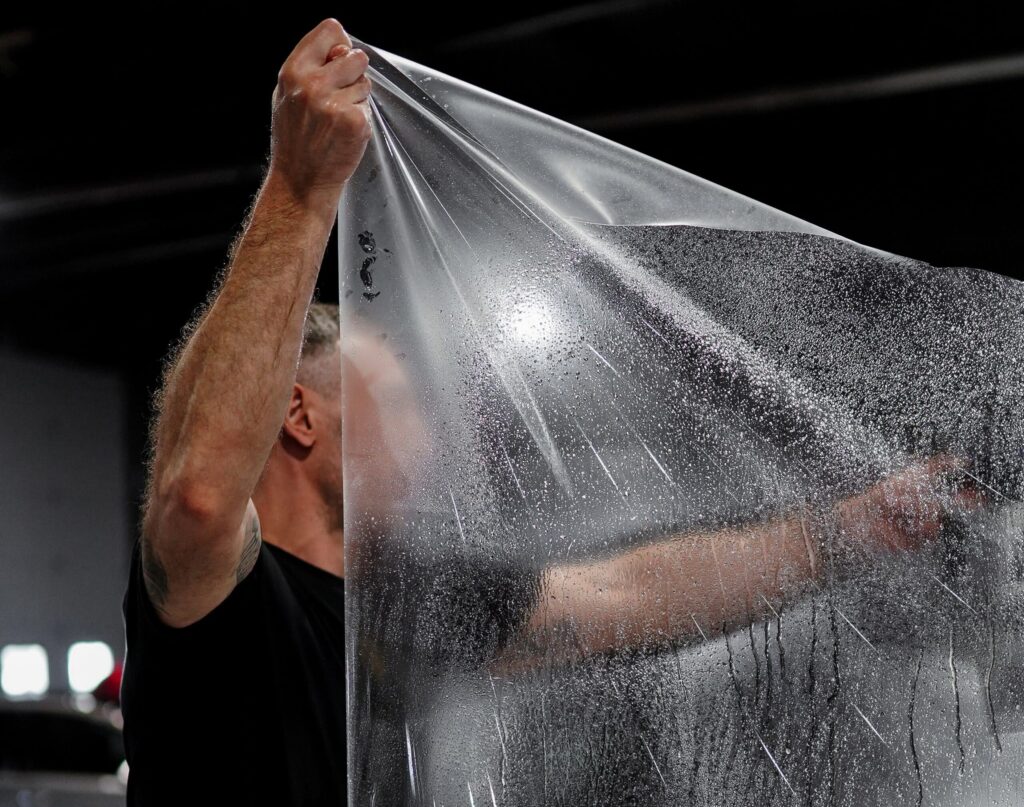
Professional settings have replaced manual cutting methods with computer-generated templates. These digital patterns match specific vehicle models and eliminate the risks associated with hand-cutting film on your paint surface. You get pieces that fit your car without trimming or modifications required.
GSWF’s Precision Cut Software demonstrates the scale of this development. The system provides access to patterns for over 30,000 vehicle models. Professionals have used this software in more than 100,000 cars across 2,000+ detailing shops worldwide. The database covers everything from common sedans to exotic supercars and makes pre-cut solutions available for any vehicle you drive.
Digital cutting reduces material waste by a lot. Pre-cut patterns use exactly what’s needed instead of oversizing bulk film and trimming excess. This precision speeds up installation and lowers costs. Services like ID Protection’s paint protection film application utilize pre-cut technology to deliver faster turnarounds without sacrificing quality.
Improved adhesive technology
Advanced adhesives have transformed installation reliability. Modern formulations minimize bubbles and alignment problems that plagued earlier PPF applications. These adhesives allow smoother installations with fewer imperfections visible in the final result.
Repositioning capability represents a major breakthrough. New adhesive chemistry lets installers lift and reposition film during application without compromising bond strength. This flexibility prevents the permanent mistakes that occurred when older adhesives grabbed upon contact. You get better alignment and cleaner edges as a result.
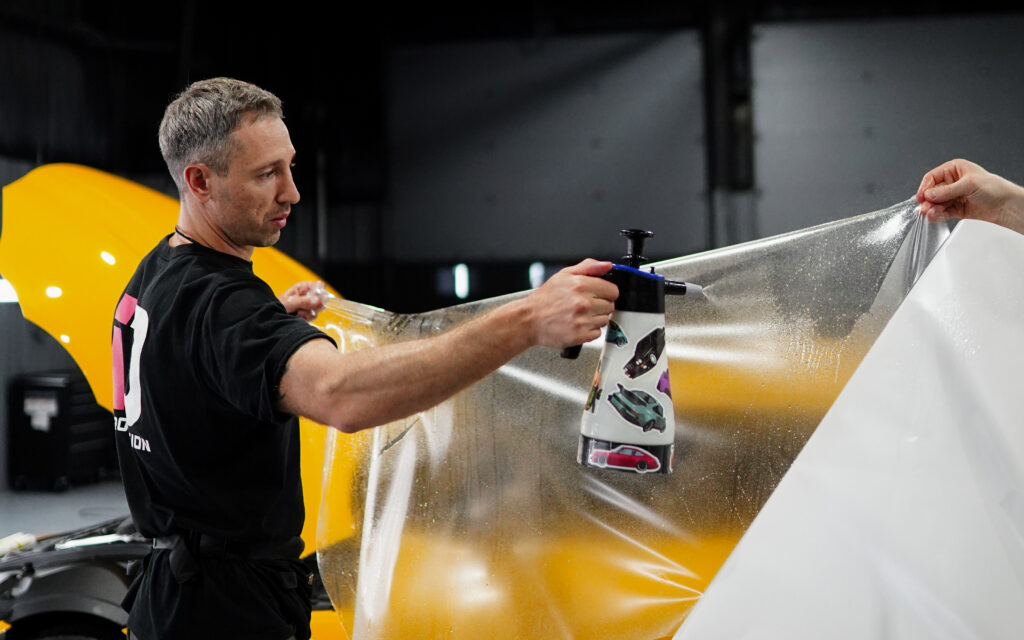
Improved adhesives work well with better application techniques. Modern squeegees and slip solutions help installers smooth out imperfections and create cleaner finishes that boost film longevity.
Automation and robotic application
Robotic systems now apply PPF with precision impossible for human hands. These automated installations reduce error and deliver perfect fits. High-volume facilities use robotics to handle multiple vehicles at once and increase throughput by a lot.
Material savings from automation run 20% to 30% compared to manual application. Robots apply coatings and reduce overspray and waste. This efficiency translates to lower costs for large-scale operations.
The AutoWrap Surface Treatment Platform uses AI-controlled humanoid robots for autonomous PPF installation. This system cuts project times from days to hours and maintains consistency unachievable through manual work. The platform handles cars, motorcycles, and even yachts with flawless precision.
Training programs are evolving alongside automation. Certification courses now cover robotic tools and advanced application methods that prepare installers for the future of ppf technology.
The Future of PPF: What’s Coming Next
Integration with vehicle sensors
Advanced Driver Assistance Systems just need PPF engineered for signal transparency. Your car’s radar, LiDAR and camera sensors sit behind painted surfaces. The wrong film creates dangerous interference. Sensor-compatible PPF has become a baseline requirement for luxury dealerships and EV specialists, especially when new energy vehicle owners adopt advanced technologies early.
Signal attenuation poses ground safety risks. Films lacking proper transparency can muffle radar signals and delay adaptive cruise control responses or automatic braking commands. Zero optical distortion over camera lenses is now mandatory. Premium thermoplastic polyurethane delivers electromagnetic-neutral properties. It allows 77 GHz radar and high-definition camera signals to pass through unaffected.
The future of ppf has micro-sensors embedded within films themselves. These sensors monitor temperature fluctuations, UV exposure levels and surface pressure or physical impacts. They sync with mobile apps or vehicle dashboards and provide live data that lets you respond to potential damage quickly.
Compatibility with electric and autonomous cars
Electric and autonomous vehicles just need specific PPF adaptations. These cars incorporate more cameras, radar and LiDAR sensors behind painted surfaces than traditional vehicles.
Expected breakthroughs for the next 5 years
Artificial intelligence is reshaping how PPF gets designed and applied. 3D scanning combined with machine learning algorithms maps vehicle surfaces for exact-fit patterns. AI analyzes usage patterns to reinforce high-impact areas. It automates cutting and application.
Self-healing will recover from scratches at lower temperatures. New topcoats will soften micro-marks from cabin warmth or mild rinses without heat guns. Nanoparticle-rich topcoats will boost slickness and scratch resistance. They help water and dirt release faster. Smart top layers may respond to temperature or light and manage surface heat or reduce minor marks. Color-adaptive concepts could appear in tasteful applications.
Manufacturing precision continues improving. Tighter thickness control, purer resins and cleaner topcoat application mean fewer defects and more uniform finishes. Software patterns will hug panel shapes better and reduce trimming time. This speeds installations.
Conclusion
Paint protection film has evolved from simple scratch defense into intelligent, responsive technology. Self-healing capabilities now work at lower temperatures. Hydrophobic coatings keep your vehicle cleaner between washes. Eco-friendly materials reduce environmental effect without sacrificing performance, and pre-cut kits with improved adhesives make installation faster and more reliable than ever before.
The state-of-the-art developments continue accelerating. Smart sensors, AI-guided application, and compatibility with electric vehicle technology will reshape what PPF can accomplish over the next five years. Professional installation through services from ID Protection’s paint protection film application maximizes these advanced features. Your vehicle gets protection that adapts to tomorrow’s challenges while preserving its appearance today.