Want to know if you should get professional PPF installation or do it yourself? The cost difference might shock you. Professional PPF services cost between $5,000 to $8,000 for full coverage. DIY kits run just $100 to $1,000. This huge price gap makes DIY look attractive, but here’s the catch – 78% of DIY PPF installations need redoing within the first year. You could waste both money and time.
The choice between professional and DIY PPF comes down to balancing upfront savings against results that last. A professional installation can last 5–10 years and reduces paint damage by a lot. DIY attempts often create bubbles and peeling that can damage your car’s paint if done wrong. Tesla’s professional installation costs range from $2,000 to over $7,000 based on coverage. TESBROS offers DIY alternatives at around $800 just to cover your car’s front.
Your budget, skills, and car’s value will help determine the best choice. You need patience and steady hands to apply PPF perfectly. The risk of damaging your paint might not be worth the savings.
This piece breaks down both options’ costs, quality differences, and practical DIY tips. You’ll know which path makes more sense for your situation.
What is Paint Protection Film (PPF)?
Paint Protection Film (PPF) acts as a powerful shield for your vehicle’s exterior. This transparent thermoplastic urethane film creates an invisible barrier between your car’s paint and the harsh outside world. Car owners who want lasting protection without altering their vehicle’s appearance now choose “clear bra” or “clear film” more than ever.
How PPF Works to Protect Your Car
PPF’s magic comes from its multi-layered structure, which absorbs impacts before they reach your paint. Picture it as a bulletproof vest for your car’s exterior. A premium PPF includes:
- Top Coating – The outermost layer with UV protection and self-healing properties
- Polyurethane Layer – The core that absorbs impacts and provides flexibility
- Adhesive Layer – Bonds the film to your vehicle’s paint
- Release Liner – Removed during installation
Your car stays protected when road debris hits at high speed because the polyurethane layer absorbs and spreads the impact energy. Research proves this protective layer can withstand impacts at speeds up to 120 mph without major damage. The film also creates a barrier against UV rays, acid rain, bird droppings, and bug splatter.
Most installers apply PPF to areas that face the highest risk from road debris: the hood, front fenders, front bumper, side mirrors, rocker panels, lower doors, and rear guards behind wheels.
Types of PPF: Gloss, Matte, and Self-Healing
Your esthetic priorities and protection needs determine which PPF variety suits you best:
Gloss PPF – This most popular option provides crystal-clear protection that keeps your vehicle’s original shine. The film blends smoothly with factory gloss finishes and adds depth to your paint.
Matte PPF – This creates a non-reflective, subdued finish that high-performance vehicle owners love. You can maintain an existing matte paint job or transform a glossy finish into something understated. Car enthusiasts often use matte PPF to create custom looks without repainting.
Self-Healing PPF – This technological marvel leads the PPF world. The advanced film’s topcoat contains elastomeric properties that repair themselves with heat exposure. Minor scratches and swirl marks vanish either from sunlight or a gentle warm rinse. Your car essentially “heals” from everyday wear and tear.
Some manufacturers also offer colored PPF options to add custom accents without a full vehicle wrap.
Expected Lifespan of PPF Installations
PPF durability depends on several factors. Premium-quality films usually last between 7 and 12 years with proper installation and maintenance. Mid-tier options typically last 5 to 8 years, while economy brands often deteriorate after 3 to 5 years.
These key factors determine your PPF’s lifespan:
- Film Quality – Premium brands use advanced thermoplastic polyurethane with self-healing technology, making this the most crucial factor.
- Installation Method – Professional installation extends the lifespan. Poor installation leads to early failure, even with premium film.
- Environmental Conditions – Your local climate affects PPF longevity. UV exposure, urban pollution, temperature extremes, and road salt influence how long the film lasts.
- Driving Habits – Highway commuters expose their PPF to constant road debris and pollution, typically seeing 7-8 years of protection. Garage-kept vehicles driven less often might reach the full 10-12 years.
- Maintenance – Regular cleaning with non-abrasive products helps preserve your PPF’s integrity.
Leading manufacturers like XPEL Ultimate Plus and 3M Pro Series back their durability claims with 10-year warranties. These options work best for long-term vehicle owners.
Professional PPF Installation: What You Get
Professional PPF installation offers advantages that DIY kits can’t match. Expert application of your paint protection film gives you precision, controlled conditions, and peace of mind that’s nowhere near what materials alone provide.
Precision Fit: Computer-Cut Templates and Hand Trimming
Professional installers use innovative computer-cut technology to achieve perfect fitting for your vehicle’s specific make and model. These systems let them download precise patterns to a plotter and cut them as needed. This precision minimizes errors and protects every contour and edge of your car.
The process combines pre-cut patterns with hand trimming to get optimal results. A professional installer explains, “For most cars, I’ll use pre-cut patterns from a plotter. For tricky areas or custom coverage, I’ll bulk cut from a roll”. This combined approach speeds up installation with cleaner edges and better stretch on complex shapes.
Controlled Environment: Dust-Free and Climate-Regulated
Professional PPF installation happens in specially designed spaces with carefully managed environmental factors. A clean room isn’t just a luxury, your installation’s longevity depends on it. These spaces managed to keep particle counts below 1,000 particles per cubic meter, which prevents contaminants from affecting your installation.
Numbers tell the story: PPF applied in clean rooms keeps 95% of its original adhesion strength after six months, compared to 80% in less controlled environments. Clean room installations also show 30% fewer cases of delamination.
Temperature and humidity control make a big difference. Professional installers keep their work areas between 18–24°C with less than 60% humidity. These conditions allow proper adhesion and film curing, something you can’t achieve in a home garage.
Warranty Coverage: Installer and Manufacturer Backing
Professional installation gives you complete warranty protection. You get two types of coverage:
- Manufacturer warranties – Cover defects in the film itself (yellowing, bubbling, peeling)
- Installer warranties – Cover the quality of application
Coverage ranges from 5 to 12 years based on film grade. Premium films like XPEL come with warranties against yellowing, cracking, peeling, staining, blistering and bubbling. Your professional installer acts as your link to the manufacturer, making warranty claims simple.
The higher cost of professional installation gives you more than labor, you invest in peace of mind through warranty coverage, quality assurance, and longer film life.
Time Efficiency: 1-3 Days for Full Coverage
A professional PPF installation takes 1 to 3 days, based on coverage and vehicle complexity. Here’s what to expect:
- Partial coverage: One day is usually enough
- Full front: Takes 1 full day
- Full body PPF: Needs 2-4 days
Several things affect installation time. Your vehicle’s size and shape matter, a compact sedan takes less time than a truck or SUV with complex curves. Paint condition might add hours or a full day if it needs correction first.
Experienced professionals work faster without cutting corners. A skilled technician can finish a hood, fenders, and mirrors in about 2 hours, while a novice might need 4-5 hours. This speed comes from understanding material behavior and proper tool usage.
The 1-3 day wait might seem long, but rushing leads to poor results. One professional installer says, “If you want a clean, long-lasting result, plan your PPF install time in days, not hours”. This patience rewards you with perfectly applied film that protects your vehicle for years.
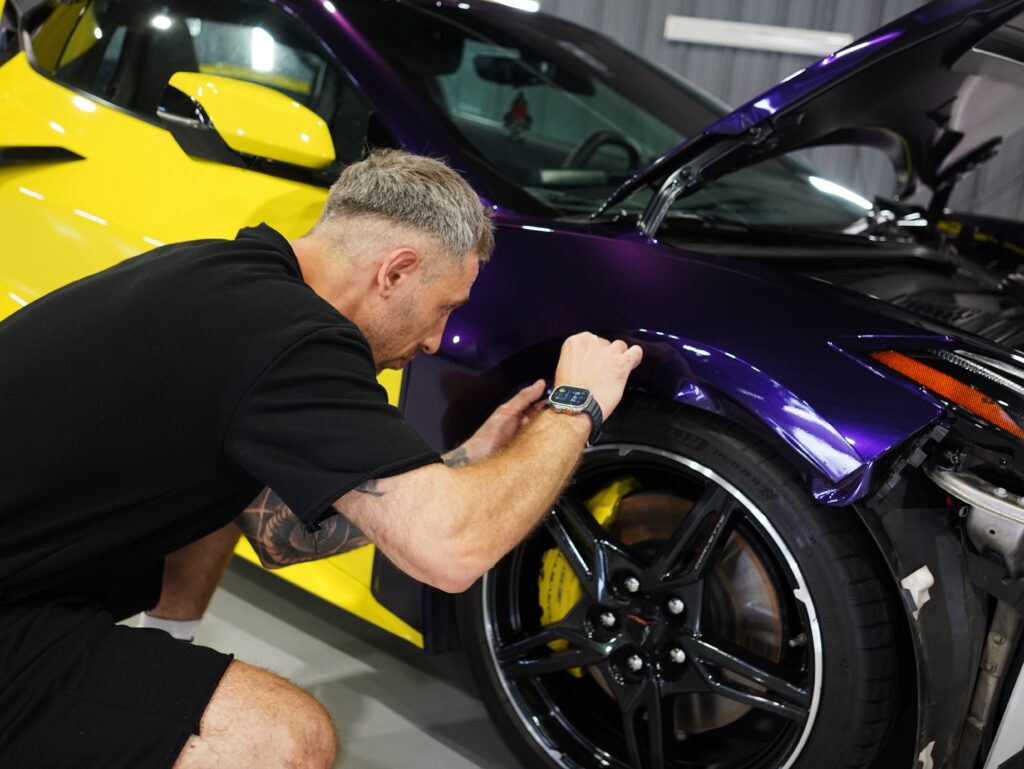
DIY PPF Kits: What to Expect
Car owners want to save money on vehicle protection, and DIY PPF kits seem like a great solution. But before you jump in, you should know what it takes to do this project right.
What’s Inside a DIY Kit
A standard DIY PPF kit gives you the basics to start the job. You’ll get pre-cut film pieces made for your car model, plus tools and solutions to install them. Here’s what you’ll find:
- Slip solution and tack solution spray bottles (you might need to buy solutions separately)
- Different types of squeegees for each stage
- Clay bar to prep the surface
- Microfiber towels (2-10 based on kit quality)
- Practice PPF pieces
- Utility knife or precision cutting tools
- Wrap gloves to keep fingerprints off the film
Learning Curve and Required Tools
Patience matters most when installing PPF yourself. A first-timer might spend 2-4 hours on just one panel like a hood or bumper. Professional PPF installers finish the same work in under an hour. The whole front end could take 6-10 hours over several days.
You’ll need more than what comes in the kit to do a good job:
A clean, enclosed space with good lighting and steady temperature comes first. Dust will ruin your day during installation.
The basic kits often skip some crucial tools: a heat gun or hairdryer, precision knife, and an infrared thermometer to check film temperature.
Solution mixing is key: Slip solution (distilled water with baby shampoo) helps position the film. Tack solution (distilled water with isopropyl alcohol) secures the edges.
Film handling takes the most time to learn. Too much stretch distorts the film, and poor squeegee technique leaves bubbles or streaks. Many experienced DIYers say curves and complex contours test their patience.
Common Mistakes: Bubbles, Peeling, and Misalignment
No matter how well you prepare, certain problems pop up often:
Air bubbles bug most first-timers. They show up because of too little slip solution, wrong squeegee use, or gaps between strokes. Small moisture bubbles (smaller than a nickel) can evaporate, but air bubbles stay unless you lift and redo the film.
Bad alignment stands out and leaves gaps in protection. The film gets harder to move once it starts sticking, and you might stretch or damage it trying. Smart installers use alignment markers or masking tape as guides.
Edges peel up a lot around corners and curves. This happens if you stretch the film too much or don’t use enough tack solution. These edges start lifting within hours, leaving the paint exposed.
Surface dirt causes headaches, tiny dust bits or hair look huge under clear film. Each speck means carefully lifting the film, cleaning it off, and trying again. This really tests your patience.
Cost Comparison: DIY vs Professional PPF
Car owners often get sticker shock when they match professional PPF installation prices against DIY options. Here’s a detailed look at what these options really cost.
DIY Kit Pricing: $100–$1,000
DIY kits might look like a bargain at first. You can find basic kits for $100-$300 for partial coverage. Better quality kits will set you back $500-$800 for front-end protection. Full-vehicle coverage kits cost between $1,500-$2,500 for pre-cut options.
The price differences come down to film quality and coverage area:
- Budget films give basic protection but yellow faster
- Premium films have self-healing properties and UV resistance
- Pre-cut kits cost more but help avoid cutting mistakes
- Bulk film rolls are cheaper but need more expertise
Professional Install Pricing: $1,000–$7,000
Professional installation costs more upfront. Basic front-end packages start at $500 and can reach $2,000 based on your vehicle’s complexity. Full front-end coverage, hood, fenders, bumper and mirrors included, costs between $1,200-$3,000.
Complete vehicle protection ranges from $3,000-$9,000+. Here’s what different areas cost:
- Hood protection: $400-$1,000+
- Front bumper: $350-$800+
- Fender pair: $300-$800+
- Full-body coverage: $4,500-$8,000 for high-end vehicles
Your vehicle’s size, surface complexity, and local market rates affect these prices. Sports cars with complex curves cost more to wrap than simple-surfaced sedans.
Hidden Costs: Rework, Tools, and Time
DIY installation costs go beyond the kit price. You’ll need extra supplies that add up quickly:
- Squeegees and spray bottles: $20-$50
- Slip solution and tack solution: $10-$30
- Cutting tools: $10-$20
- Heat gun: $20-$50
Tools and supplies add $50-$150 to your project.
Mistakes turn out to be the biggest hidden cost. A failed installation means buying new film or paying professionals to fix things. One wrong cut with a razor blade can damage your paint permanently and lead to expensive repainting.
Time becomes another major factor. Most DIY enthusiasts spend 10-20+ hours on a full installation. Professional shops finish the same job in 1-3 days. That lost weekend (or three) means a lot to many people.
Professional installation brings benefits you might not see in the price tag:
- Professional warranties (often 5-10 years)
- Perfect edge alignment and sealing
- Peace of mind from expert application
The price gap between professional and DIY PPF shrinks after you add tools, possible do-overs, and your time’s value.
Durability and Finish Quality
Paint protection film’s true worth shows up way after you get it installed. Your choice between professional or DIY application shows its effects over years, not months.
Film Lifespan: 1–3 Years DIY vs 5–10 Years Pro
Professional and DIY installations have a huge gap in how long they last. A pro-grade PPF usually lasts 5-10 years with proper installation. Companies back this up with matching warranties. DIY applications need replacement within 1-3 years, even with correct application.
Several reasons explain this big difference:
- Quality of materials: Pros have access to premium films with better durability, optical clarity, and self-healing features
- Installation expertise: The right tension, proper lineup, and edge sealing methods make films last longer
- Environmental control: Clean rooms and the right temperature stop contamination that cuts film life short
A car owner’s story tells it best: “I tried installing PPF myself on my BMW’s hood. Six months later, the edges were peeling, and water had seeped underneath. The professional reinstallation cost me twice what I would have paid originally”.
Numbers tell the story – 78% of DIY PPF installations need redoing within the first year. This fact makes those upfront savings look questionable when you think about the cost and hassle of early replacement.
Edge Sealing and Adhesion Differences
Pro-level edge sealing makes films last much longer. Pros seal every edge carefully to stop lifting and peeling. These issues usually start in high-contact areas like door handles, hood edges, and bumpers.
Temperature during installation really affects how well the film sticks. Pros keep their workshops between 70–80°F (21–27°C) for the best adhesion and film flexibility. DIY jobs in home garages with changing temperatures often lead to bubbles or lifting edges.
Visual Finish: Seamless vs Visible Seams
Trained eyes spot the difference between pro and DIY work right away. Pro installations give you a “seamless, nearly invisible finish”. You can barely tell where the film stops and the paint starts.
DIY attempts usually show:
- Seams you can see between panels
- Obvious edges that collect dirt as time passes
- Flaws where dust got trapped during installation
Pros use edgeless installation methods that look better and help the film last longer. Regular PPF shows wear around edges within 5-7 years. Pro edgeless applications can stay perfect for up to 15 years.
Quality pro work stands out through clean, seamless edges and careful attention to detail. This difference grows more obvious as DIY jobs age too fast. Pro-grade films protect better, stay clear longer, and fight off yellowing that often hits cheaper options.
High-value vehicles need this quality difference not just for looks but to protect their worth. As one pro installer says: “A well-installed PPF can protect your vehicle for years, preserving its paint from chips and environmental damage”.
Use Case Scenarios: Which Option Fits You?
Your specific situation determines whether you should choose professional or DIY PPF installation. The right choice depends on your vehicle type, coverage needs, and how long you’ll keep your car.
Best for Daily Drivers vs High-End Vehicles
Daily drivers need smart PPF application that balances protection and cost. Regular vehicles like sedans, SUVs, and trucks work well with partial PPF installation on areas that take the most damage. These vehicles just need protection on the front bumper, partial hood, and headlights – places that rock chips and debris hit most often.
“If you’re driving a Toyota Tacoma or Tesla Model 3, partial front-end PPF might be the smart play,” notes one industry expert. DIY kits are enough for these everyday applications if you have patience and steady hands.
Partial Coverage vs Full Body Wraps
Partial PPF coverage protects your car’s vulnerable spots without high costs. This approach has:
- Front bumper (takes the most hits)
- Partial hood (catches most rock chips)
- Headlights (costly to replace)
- Mirrors (debris magnets)
This focused protection serves drivers who want practical defense against daily hazards. Partial installation gives the best value for budget-conscious owners.
Full body PPF covers every painted surface. The higher costs make sense for luxury vehicle owners, those wanting showroom condition, or people living near construction, salt, or gravel roads. You’ll need professional installation for full wraps because they’re too complex for DIY.
“For those focused on budget-friendly protection, partial coverage can be a great choice to cover just the most vulnerable areas,” suggests one industry resource. The visible seam lines on partial coverage might bother some appearance-conscious owners.
Short-Term Ownership vs Long-Term Investment
Your ownership timeline affects which PPF approach works best. Short-term owners (2-3 years) won’t get their money’s worth from expensive full-body professional installation. They should focus on DIY application for high-impact areas or get professional partial coverage.
As one expert puts it: “The only time we’d justify spending that kind of money on a full-body PPF job is if we planned to keep the car for a very long time”. Short-term owners should protect high-impact areas economically rather than getting full coverage.
Long-term ownership changes everything. Professional PPF becomes an investment rather than an expense if you’re keeping your vehicle for years. Protection lasting 5-10 years keeps both looks and resale value intact throughout ownership. Full-body professional protection works best for those who want to enjoy their vehicle’s original, pristine paint long-term.
Note that PPF works well for all vehicles. Both luxury and everyday cars can benefit from protection, with options fitting every budget and ownership plan.
Step-by-Step: How to Install DIY PPF
Want to install PPF yourself? Let’s head over to the essential steps that will help you get the best results with your DIY project.
Surface Prep and Cleaning
Your paint’s cleanliness is the foundation of a successful PPF application. Start by washing your car with pH-neutral car shampoo to get rid of surface dirt and grime. A light-grade clay bar works best to remove embedded contaminants without damaging your paint. A quick wipe using a 50/50 mixture of isopropyl alcohol and water will cut through any remaining residue or oils. Make sure to dry everything with clean microfiber towels before moving forward.
“Skipping prep is the fastest way to ruin an installation since even tiny particles can cause bubbles under the film,” notes one expert. Your work environment needs attention too. The ideal space should be enclosed and dust-free with temperatures between 70–80°F (21–27°C).
Slip Solution and Film Alignment
Two significant solutions need mixing before you start:
- Slip solution: 1000ml distilled water with 5ml dish soap (baby shampoo works well)
- Tack solution: 800ml water with 200ml of 70% isopropyl alcohol
The slip solution should be sprayed generously on the vehicle’s surface and the film’s adhesive side. This helps prevent early sticking and lets you reposition as needed. Solo installers should create a “dry anchor point” by squeegeeing a small section at one edge to keep the piece from sliding.
Squeegee Technique and Heat Application
Use firm, consistent pressure with short “stabbing” strokes instead of long “petting” motions. Start from the center and work outward with overlapping strokes that push air and moisture toward the edges. The film’s surface should stay lubricated with slip solution to help your squeegee move smoothly.
A heat gun held at least six inches away helps with curves and complex contours. This makes the material just soft enough to shape around challenging areas without warping.
Final Inspection and Cure Time
Check edges and corners carefully after application since lifting often starts there. Stubborn spots need tack solution first, then slip solution on top, followed by thorough squeegeeing. Small moisture bubbles usually disappear within 7-14 days, while larger air pockets need immediate attention.
Your newly installed PPF needs time to cure. This usually takes 1-2 days, depending on temperature and humidity. Keep your vehicle away from harsh conditions and avoid washing during this time.
Professional vs DIY PPF: Final Comparison Table
A head-to-head comparison of professional and DIY PPF will help you make the right choice.
Decision Matrix Based on Budget and Skill Level
Choose DIY if:
- You need to protect a small or flat panel
- You enjoy hands-on projects and have patience
- Your car’s age or usage pattern suits simple protection
- Small imperfections don’t concern you
Choose Professional if:
- Your vehicle features complex curves or high value
- You want perfect, bubble-free coverage
- You plan to keep your car for many years
- Warranty protection matters to you
DIY installation works well for daily drivers needing simple protection. However, luxury vehicles or those requiring lasting results benefit more from professional installation.
Conclusion
Your choice between professional and DIY PPF depends on your priorities, skill level, and your car’s value. Professional installation gives you peace of mind with perfect application, strong warranties and a much longer lifespan. Professional work costs 5-10 times more upfront but pays off through better edge sealing, flawless finish, and protection that lasts up to a decade.
Budget-conscious car owners often choose DIY kits because of lower prices. But most first-time installers struggle with bubbles, peeling edges, or alignment problems. The true cost goes beyond the kit price when you factor in your time, extra supplies, and possible rework.
Daily drivers that need simple protection on high-impact areas might do fine with DIY application if you have patience and steady hands. Your everyday sedan or SUV can get enough protection with partial coverage that balances cost and practicality.
Premium cars need an expert’s touch that specialists bring to each installation. Their certified technicians handle complex curves and contours with precision that DIY attempts can’t match.
Your ownership timeline matters too. Professional PPF becomes an investment rather than an expense if you plan to keep your car for years. The protection maintains both looks and resale value throughout your time with the car. Short-term owners might find partial professional coverage or careful DIY application makes more financial sense.
Professional colored PPF installation service creates better results that last longer and look superior, especially important for valuable vehicles or long-term ownership. DIY works best if you’re budget-conscious, comfortable with hands-on projects and can accept some imperfections. Quality PPF protects against environmental damage and road hazards that can harm your car’s appearance and value, regardless of your choice.