Quality PPF film can fail due to improper installation. Tiny dust particles might create bubbles or cause the film to lift after installation. Small scaling errors of just 2-3% during paint protection film application can create visible edge lifting and gaps.
Your investment in quality PPF protects your vehicle’s paint, but this invisible shield works best only with proper application. Poor surface preparation ranks among the most common mistakes that can get pricey during PPF installation. Your vehicle’s surface must be free from dirt, dust, and oils. These contaminants prevent proper film adhesion and cause visible flaws that may peel over time. Quick installations often result in small yet important mistakes that reduce your protective film’s performance and durability.
The right environment makes a huge difference in PPF application success. Your workspace temperature should stay between 18-24°C, and humidity needs to stay under 60%. Results can suffer greatly outside these conditions. Knowledge of these common PPF mistakes will help you get that perfect, invisible finish – whether you plan to do it yourself or choose a professional service.
Mistake 1: Skipping Proper Surface Preparation
The right surface prep is the foundation of a successful PPF installation. Paint protection film won’t forgive any shortcuts during prep work. Let me show you why this first step can make or break your PPF project.
Why surface prep is significant
Your paint protection film’s adhesion and performance depend on surface preparation. Even premium film cannot compensate for a poorly prepped surface. Contaminants left on paint create tiny gaps between film and surface. This guides the way to bubbling, peeling, and discoloration.
Bad preparation has consequences. The film makes existing defects more visible instead of hiding them. Those tiny scratches or swirl marks you barely see now will get sealed under the film. Your vehicle’s imperfections will stand out more than ever.
Surface uniformity affects adhesive bonding. Uneven spots create weak areas and lifted edges that hurt the film’s protection. Note that fixing these problems usually needs complete removal and reinstallation. This doubles your costs and work.
Common contaminants that ruin adhesion
Your car faces invisible enemies that can ruin PPF installation:
- Industrial fallout and airborne pollutants
- Rail dust and brake dust residue
- Mineral deposits and water spots
- Road grime and embedded dirt
- Oils from washing or handling
- Wax and sealant residues
You can’t see most contaminants, but they mess with film adhesion. Chemical cleaners might remove surface oils but often miss embedded particles. That’s why mechanical decontamination matters – it removes what chemicals can’t touch.
Step-by-step cleaning checklist
Here’s the process to get the best results:
- Initial wash: Work from top to bottom with a soft sponge or wash mitt. A wax-free automotive cleaner helps remove residues that block film bonding.
- Decontamination: Clay treatment with proper lube safely removes bonded particles from paint without clear coat damage.
- Rinse and inspect: Run your hand over the paint to check smoothness, it should feel like glass.
- Degreasing: Mix equal parts isopropyl alcohol and water to cut through leftover oils without paint damage. Use a clean microfiber towel and don’t use much.
- Final drying: A clean microfiber towel dries all surfaces. Trapped moisture under PPF creates bubbles and peeling.
Recommended tools for prep
Good tools help achieve professional results.
Start with pH-neutral automotive soap that leaves no residue. Soft microfiber wash mitts prevent scratches during the first cleaning.
Clay bars or blocks are must-haves for decontamination. They pull out stuck contaminants that washing misses. Use proper clay lube to avoid surface damage.
The degreasing step needs 70% isopropyl alcohol mixed with distilled water. Lint-free microfiber towels apply this mix without adding new contaminants.
Light plays a big role. Good lighting helps spot contaminants or bubbles you might miss. LED work lights can show every angle during prep.
Quick prep creates more headaches than it solves. One extra hour of good cleaning saves days of trouble with bad installation. The pros say it best – prep isn’t just step one, it’s half the job.
Mistake 2: Installing in Poor Environmental Conditions
Your PPF installation’s success depends heavily on the environment. Perfect preparation techniques won’t help if conditions aren’t right. The way film sticks, cures, and performs over time depends on environmental factors. Let’s get into these variables that many DIY installers miss.
Ideal temperature and humidity levels
Temperature significantly affects the quality of PPF installations. Most films work best between 20–28°C (68–82°F). The film stays flexible and adhesive behaves as expected in this range. This makes positioning and finishing much easier.
Working in extreme temperatures creates specific problems:
- Too cold (below 15°C/60°F): Stiff adhesive makes the film harder to stretch and raises the risk of lift marks
- Too hot (above 32°C/90°F): Adhesive becomes overly tacky too fast, giving you less time to reposition
The right humidity also matters for installation and curing. Humidity should stay between 40-60%. This sweet spot prevents two common issues:
- Excessive humidity (above 60%): Moisture slows adhesive curing and can trap water vapor under the film
- Too dry: Quick bonding leaves little room for adjustments
Spring and fall provide the most stable conditions for installation. These seasons help you avoid summer heat and winter cold.
Why dust-free environments matter
A single speck of dust between film and paint becomes a permanent flaw that could compromise protection. Tiny dust particles create major headaches during PPF installations.
Dust and particulate contamination hurt PPF quality by:
- Making visible flaws in the film
- Weakening adhesive bond strength
- Shortening the film’s lifespan
Professional installations happen in controlled indoor spaces for good reason. Outdoor work exposes your project to pollen, bugs, and particles that will stick to adhesive surfaces. These contaminants do more than look bad – they weaken the film’s structure by preventing full adhesion.
Many professionals use filtered air systems or dedicated clean rooms for premium installations. This focus on cleanliness delivers flawless results.
Dust contamination often causes:
- Edges lifting where contaminated areas won’t stick
- Growing air bubbles
- Early film failure at contamination points
Lighting setup for better visibility
Good lighting helps you spot critical defects during installation. Bright, even light shows air bubbles, streaks, and trapped debris that might otherwise hide until too late.
The best lighting approaches include:
- Bright LED lights placed to eliminate shadows
- Multiple light sources from different angles
- Movable lights to check surfaces from all sides
Bad lighting hides subtle problems like:
- Small air bubbles that grow with temperature changes
- Trapped dust particles under the film
- Misaligned edges and seams
- Water pockets from incomplete squeegee work
Many professionals use specialized lights with high color rendering index (CRI) bulbs. These show true colors and surface textures, which helps spot areas where film hasn’t fully conformed to vehicle contours.
Working with poor lighting is like walking through a dark room – you’ll run into problems. Quality lighting helps you achieve precision work.
Mistake 3: Using the Wrong Tools
Your choice of tools can make the difference between professional-looking PPF installation results and mistakes that get pricey. Many DIYers just grab whatever they have around, not knowing that PPF needs specific equipment to work right. Let’s look at the right tools and see how wrong ones guide you straight to frustration.
Essential tools for PPF installation
Paint protection film success starts with the right equipment:
- Quality squeegees in various hardness levels and shapes
- Sharp cutting tools with replaceable blades
- Heat sources (heat gun or butane torch)
- Application fluids for proper slip and positioning
- Microfiber cloths for cleaning and final wiping
Application solution plays a crucial role. It helps the film slide into position smoothly. Specialized application foam makes it easier to spot residue under the film, especially when you have tough curves or complex installations.
Why blade sharpness matters
Picture cutting wrapping paper with dull scissors. Now imagine that paper costs hundreds of dollars and goes on your $50,000 vehicle. Blade sharpness becomes non-negotiable for PPF work.
Dull blades create jagged edges, tear film, and might damage your vehicle’s paint. You need knives that deliver clean cuts for vinyl wrap and PPF work without scratching the surface.
Professional installers recommend:
- Using 30-degree blades for PPF cutting
- Replacing blades frequently throughout a full vehicle installation
- Letting the sharpness do the work instead of forcing the blade
Sharp blades create precise edges that stay adhered longer and look better. Many experts call snap-off knives like the OLFA ASB-10 ideal because they give you fresh blades instantly during installation.
Choosing the right squeegee
Your vehicle’s different areas need different squeegee types. Wrong squeegee choices can leave bubbles, streaks, or scratches on sensitive surfaces.
Squeegees come in various hardness levels (measured in Shore A):
- Hard squeegees (80-90 Shore A): Perfect for original water expulsion and positioning
- Medium squeegees (60-70 Shore A): Great for smoothing ripples and ensuring adhesion
- Soft squeegees (40-50 Shore A): Best for delicate areas like headlights
Specialized multi-layered squeegees let you adjust pressure by just turning them around. This flexibility helps you handle different vehicle contours without switching tools.
Heat gun vs. torch: when to use each
The heat gun versus torch debate isn’t about picking a winner, it’s about knowing the right tool for each job. Both tools serve different purposes in PPF installation.
Heat guns offer broader, gentler heating that works great for:
- Softening large sections of film
- Initial conforming to curves
- Preventing overheating damage
Butane torches shine with precision and intensity perfect for:
- Locking down edges and corners
- “Killing” the film’s memory so it stays put
- Creating crisp, professional finishes in tough spots
The pros say: “Don’t throw away your heat gun, both tools work best together”. Heat guns handle broader areas well, while torches finish corners and edges perfectly.
Set flame strength to 75-100% for proper torch usage with PPF. Lower settings won’t give you the quick, sharp heat needed for edge locking. Start with the heat gun on edges before finishing with the torch to get the best results.
Understanding each tool’s specific purpose helps avoid installation mistakes. Quality tools don’t just make the job easier, they ensure the film performs well for years.
Mistake 4: Misalignment During Application
Misalignment stands out as one of the biggest PPF installation mistakes that challenges even seasoned installers. Poor film positioning can ruin your installation results, yet many DIY enthusiasts make this error.
How misalignment affects film longevity
The right PPF alignment does more than enhance appearance, it determines how long your protection lasts. Like a poorly fitted suit that tears at the seams, misaligned film creates weak spots that fail too soon. Your PPF’s effectiveness depends on its adhesive bond to your car’s surface. Gaps, overhangs, and exposed paint areas quickly become visible when the film isn’t arranged properly.
These alignment problems create issues beyond esthetics. Misaligned edges face extra stress from:
- Environmental exposure that attacks weak spots
- Water and contaminants seeping beneath lifting edges
- Physical wear from washing and daily driving
Picture misalignment as applying a bandage crooked, it won’t heal right and detaches quickly. The film can suffer permanent damage if you try to peel and reposition it multiple times. Once PPF starts sticking to your vehicle, repositioning becomes very challenging.
Using alignment markers and tape
Smart installers avoid guesswork with positioning. They take an organized approach using visual guides. The process starts by marking the installation area with masking tape before applying the film. This creates a visual map to keep you on track.
Complex curved surfaces need reference points like body lines, panel edges, and trim pieces. These natural markers help maintain proper orientation during installation.
The film needs precise centering on your marked area when using slip solution. Your hands should smooth major air pockets while checking if the film moves freely. More solution is needed if you notice dragging or sticking. The squeegee should stay unused until your alignment locks in place.
Working in small sections
Tackling large areas at once often causes alignment problems. Better control comes from working systematically on manageable sections.
Beginners build confidence and precision by starting with small sections. Professionals recommend this proven technique:
- Float the film on slip solution for free movement
- Create anchor points by lifting one corner at a time
- Apply tack solution under each corner
- Place corners back down with moderate tension
- Hold each anchor point for about ten seconds to activate adhesion
This corner tacking method gives you control points that make edge wrapping easier and reduce excess trimming. It works like securing a tent’s corners before handling the middle.
Start working from the center outward after setting anchor points. Use controlled, overlapping squeegee strokes to push fluid away. This systematic approach works best with complex curves and challenging vehicle contours.
Patience brings better results with PPF installation. Small, manageable sections allow greater precision than rushing through large areas. As the saying goes, slow is smooth, and smooth is fast.
Mistake 5: Not Using Enough Slip Solution
Slip solution might seem like a minor detail in your PPF installation process. Using too little can doom the whole ordeal from the start. Many DIY installers underestimate how this invisible helper creates perfect installations. Let’s get into why slip solution deserves your full attention.
What is slip solution and why it matters
Slip solution works as a temporary lubricant that allows PPF to float freely on your vehicle’s surface before permanent bonding. This specialized fluid gives you precious time to position the film precisely without premature adhesion. Picture sliding furniture across a wood floor versus carpet – the right amount of slip creates smooth movement where you need it.
A properly mixed and applied slip solution offers several key benefits:
- Creates smooth glide across painted surfaces
- Permits repositioning without distorting the film
- Controls how quickly adhesive transitions from float to tack
- Affects edge behavior during installation
- Determines overall control and speed
This process guides to frustrating collateral damage if done wrong. The film grabs immediately with too little solution and creates distortion and wrinkling. Small adjustments in your solution mix can dramatically change the film’s behavior on your vehicle’s surface.
Correct mixing ratios
Professional installers don’t guess at slip solution formulas. Precise measurements deliver consistent results:
The standard mixture combines distilled water with baby shampoo or mild dish detergent. Most applications work best with 1.5–2ml of baby shampoo per 32oz of distilled water. This baseline provides adequate slip for standard conditions.
Your formula may need adjustments based on environmental factors:
- For hotter conditions: Increase to 3-6ml of slip agent per 32oz water
- For high-tack films: Up to 12ml per gallon may be necessary
Critical mixing tips:
- Always use distilled water (tap water contains minerals that interfere with adhesion)
- Measure slip agents with precision syringes for accuracy
- Mix solutions fresh daily – don’t store overnight
- Gently tilt bottles to mix – avoid shaking that creates foam
Most installation troubles come from inconsistent chemistry. Homemade blends often cause fogging, unpredictable tack, and contamination issues. Consistency matters more than experimentation.
How to apply solution effectively
The right application technique maximizes slip solution benefits during installation. Flood both the panel and film generously to start. Spray the adhesive side immediately when removing the liner from your PPF to prevent static contamination. This timing stops dust particles from bonding to the exposed adhesive.
Professional workflow uses multiple bottles with specific purposes:
- Primary slip solution: Your main installation mixture for positioning
- Pure distilled water: Used to neutralize soap and help edges settle
- Tack solution: Applied much of either when you need strong bite in specific areas
Reduce shampoo by 0.5-1ml or flush with pure distilled water if your film slides excessively. Add 0.5-1ml more shampoo or increase hydration under the film if it grabs too quickly.
Note that slip solution isn’t just about making installation easier, it directly affects your PPF’s performance years after application. This liquid foundation sets everything else up for success when done right.
Mistake 6: Overstretching or Overheating the Film
Poor PPF film installation techniques lead to issues that show up days or even weeks later. Overstretching and too much heat are the most damaging mistakes installers make.
How overstretching causes edge lift
PPF film needs stretching on curved areas, but there’s a delicate balance. Pulling the film too hard creates internal tension that works against the adhesive bond. The edges start lifting just days or weeks after installation.
The film wants to return to its original shape, which causes edge lifting. It has a “memory” of its natural state and pulls against the adhesive. This makes the bond fail at weak points, usually edges and corners.
You’ll spot overstretched film by these signs:
- White lines appearing in the film’s face
- Orange peel-like texture in certain lighting
- Distorted reflections across the surface
- Excess material bunching at edges
Edge problems are among the most common post-installation issues. They happen because installers stretch corners too much, creating tension that overwhelms the adhesive.
Safe heat levels for PPF
Heat can be your best friend or worst enemy during PPF installation. The right amount helps the film conform to complex curves. Too much damages the film’s structure and adhesive properties.
The ideal vehicle surface and air temperature should be between 55°F and 90°F (13°C – 32°C). Working in temperatures outside this range causes problems. The film becomes stiff and brittle below 32°F, while temperatures above 100°F harm its bonding ability.
Here’s how to control heat during installation:
- Start with lower heat settings and increase gradually
- Keep heat sources moving constantly, never focus on one spot
- Apply heat evenly across larger areas before focusing on details
- Let the film cool completely before testing adhesion
Reading the film’s behavior
The best installers know how to “read” the film’s response during application. The film tells you what to do next, if you watch carefully.
Watch how the film behaves as you fit PPF patterns. Stretch just enough to make it lay flat. The film signals it’s ready for squeegeeing once it’s flat and positioned correctly. Missing these signals results in poor alignment and excess material at edges.
Expert installers recommend stretching material without heat first on curved areas. They use the Paint Protection Film’s natural flexibility. This approach reduces heat damage risk while allowing proper conforming to complex surfaces.
The film’s behavior guides your installation, showing exactly how much manipulation works before problems start. Future failure is guaranteed if you push the film beyond its physical limits.
Mistake 7: Poor Squeegee Technique
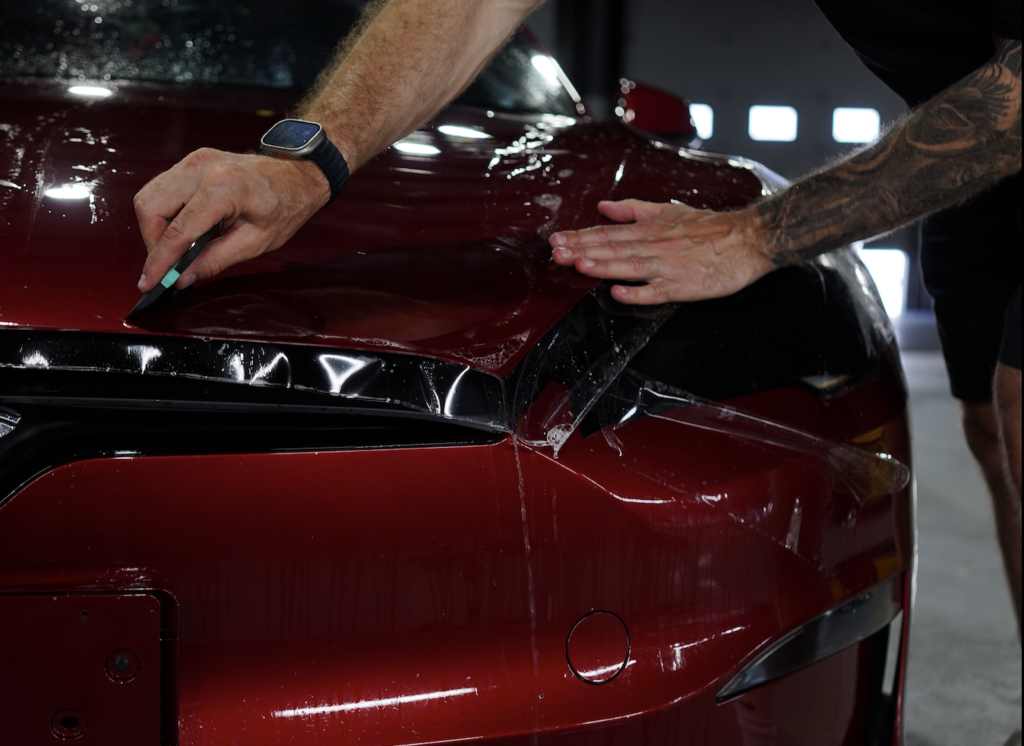
The right squeegee technique makes all the difference between professional results and amateur disappointment after positioning your PPF. Even the best films won’t help if you don’t apply proper pressure or make random movements.
Center-out method explained
The center-out method is the foundation of proper PPF application. Expert technicians start by applying firm pressure from the middle of each panel and work their way outward to the edges. This helps spread the adhesive evenly on the surface.
Picture smoothing out a tablecloth – you wouldn’t start from one corner and drag across. Starting from the center gives you better control as you work the film into place. Working outward from the middle lets both air and extra slip solution escape toward the edges.
The pros know that center-out squeegeeing stops uneven adhesion that can create streaky patterns or lift lines after installation. You’ll need consistent pressure with each stroke to get that perfect finish. Don’t be too aggressive or you’ll create stretch marks, but stay firm enough to push out all the liquid.
Avoiding trapped air and bubbles
We see bubbles under PPF when air gets stuck between the film and paint surface. These flaws come in two types: air bubbles that stay the same size (round and sharp), and moisture bubbles (cloudy) that might change shape and fade away.
Here’s what you can do with small bubbles:
- Add a light spray of water over the problem area
- Use your squeegee to push the bubble gently toward the edge
- Keep pressure steady and firm without stretching the film
Using overlapping strokes
Overlapping squeegee strokes make sure you don’t miss any spots. Each new stroke should cover about half of your last one. This creates a pattern that leaves nothing to chance.
It’s just like painting a wall – you overlap brush strokes to cover everything. Using overlapping strokes with your squeegee works the same way, but needs more precision. This method helps you remove all extra slip solution and get rid of air bubbles that could grow bigger later.
The experts often wrap their squeegees in soft cloths for two reasons. This protects the delicate film from scratches and helps maintain steady, firm pressure during installation. The right technique combines good tools with careful, considered application.
Mistake 8: Rushing the Installation Process
Time is crucial for a quality colored PPF installation. Many car owners rush this precision work and believe speed equals better results, but reality proves otherwise.
Why patience creates better results
Professional PPF installers give each step careful attention, never rushing. A proper installation needs enough time to clean, position, and apply the film correctly. Quality installations take 8-20+ hours, sometimes over multiple days. New installers working on a single panel like a hood should plan for 2-4 hours minimum.
Rushing triggers multiple problems: misalignment, bubbles, and weak adhesion points that put your vehicle’s protection at risk. Industry experts confirm that “Quick-fix approaches usually mean skipping processes, cutting corners, and long-term issues”.
Breaking the job into manageable parts
Professional installers split complex installations into smaller sections:
- They finish one panel before starting another
- Quality takes priority over speed at every stage
- Each step gets proper drying time
Picture it like wrapping a gift, careful attention makes everything align perfectly.
Common signs of a rushed job
A rushed installation shows these warning signs:
- Bubbles and wrinkles from poor squeegee technique
- Edges lift due to incorrect tension
- Dust and debris trapped under the film
- Sections don’t align with uneven borders
- Film shows wrinkles and creases throughout
Quality protection demands patience, it’s not just good practice, it’s essential.
Conclusion
Paint protection film gives your vehicle’s paint amazing defense, but the way it’s installed makes the difference between perfect protection and problems that can get pricey. This piece shows how little mistakes can guide you straight into bigger problems down the road.
A full picture of surface preparation is the foundation of any PPF project that works. Your project will fail if you skip this step, whatever film quality you use. On top of that, temperature and humidity affect your results by a lot, so you should pick your workspace carefully.
Your choice of tools plays a vital role too. The quality of your installation depends directly on having sharp blades, the right squeegees, and proper heat sources. The way you line up the film prevents edges from lifting and stops early failure that you see in rushed work.
People often overlook slip solution management, but it changes how your film behaves when you’re putting it on. You’ll run into grabbing and wrinkling that ruins your work if you don’t use enough solution.
The most important thing to remember is that patience beats speed every time with PPF installation. You’ll get nowhere near the same results by rushing as you will by breaking the job into smaller sections and working step by step.
DIY installation might look good for your wallet at first, but professional PPF installation services like those from ID Protection are often more economical in the long run. Their experts deal with these challenges every day and know how to avoid common mistakes that make films fail.
You’ll protect both your vehicle and your investment by understanding these critical mistakes, whether you choose professional installation or do it yourself. When PPF is done right, it creates an invisible shield that keeps your paint looking fresh from the showroom for years. When it’s done wrong, you learn an expensive lesson about why details matter so much in this demanding work.