Toronto roads are hard on paint. Winter salt, spring gravel, and stone chips off the 401, the DVP, and the Gardiner wear through a clear coat in a few seasons, and the repaint bill lands long before you sell the car. Paint protection film is the fix, and two names dominate almost every shortlist. Choosing between XPEL vs 3M paint protection film is the question we hear from drivers before they book, because both sit at the top of the market. Both films now carry a ten-year manufacturer warranty. 3M lays out the terms in its own warranty documentation, where the coverage runs a full decade and transfers to a second owner, and XPEL backs its Ultimate Plus film for the same length of time. Get the film right and the panel underneath stays factory. Get it wrong, or get it installed badly, and you are left with a visible line and a story about a repair.
Paint protection film, defined. Paint protection film (PPF) is a clear urethane layer applied over a car’s painted panels to take rock chips, road rash, light scratches, and chemical stains so the factory paint stays intact. Most quality films are about 8 mils thick and self-heal light swirl marks with heat. It is a sacrificial layer, which means the film wears instead of your paint. That is the whole reason to compare XPEL and 3M paint protection film in the first place: you are buying a layer that takes the hits your finish would otherwise take.
How XPEL and 3M Actually Compare
Here is the honest version, because a lot of what gets repeated online about XPEL vs 3M PPF is out of date. On paper the two films are far closer than most buyers expect, and the differences that remain are small enough that they rarely decide the outcome on their own. The table below sets them side by side on the specs people actually ask about.
| Spec | XPEL Ultimate Plus | 3M Scotchgard Pro Series |
|---|---|---|
| Thickness | About 8 mil | About 8 mil |
| Self-healing | Heat-activated, slight edge | Heat-activated |
| Clarity and yellowing | Very clear, slight edge | Very clear, UV stable |
| Warranty | 10 years | 10 years, transferable |
| Finishes | Gloss and matte or satin | Gloss and matte or satin |
| Price | Usually a little higher | Usually a little lower |
| Pattern library and precision | Slightly deeper | Deep |
A few myths are worth clearing up before you weigh XPEL or 3M PPF too heavily on the specs. The first is thickness. People assume XPEL is the thicker film, but that is not how it works today. XPEL’s Ultimate Plus specs put the film at 8 mil, the same order as 3M’s Scotchgard Pro Series, and XPEL’s surface films for cars all land in that range. The 13-mil-plus XPEL Armor is a textured off-road film, not the everyday clear film that goes on a street car, so it does not belong in this comparison. The second myth is finish. Both makers offer gloss and a matte or satin option, so 3M is not gloss only. On warranty, the old idea that 3M runs short and cannot be transferred is simply wrong now.
Self-healing is where the two are closest of all. Both films use a heat-activated top coat, so light swirl marks and fine scratches lift out on their own once the surface warms up. In practice our installers put it plainly: once it is warmer than about 20 degrees outside, those light scratches on the film disappear by themselves in the sun. XPEL has a slight reputation edge on healing and clarity, but for a daily driver that difference is hard to see. This is why comparing XPEL and 3M paint protection film on the film alone tends to end in a draw.
Does the Installer Matter More Than the Brand?
For most drivers, yes. This is the part the spec sheets never tell you, and it is where the real difference lives. When two films are this close, the install decides the result: whether the edges are wrapped or show a line, whether there is dust or a lifted corner under the film, and whether the film is tucked into the panel gaps or stops short. A perfect film applied poorly still looks like a wrap gone wrong. That is the honest reason we push the XPEL vs 3M question past the brand and onto the bench.
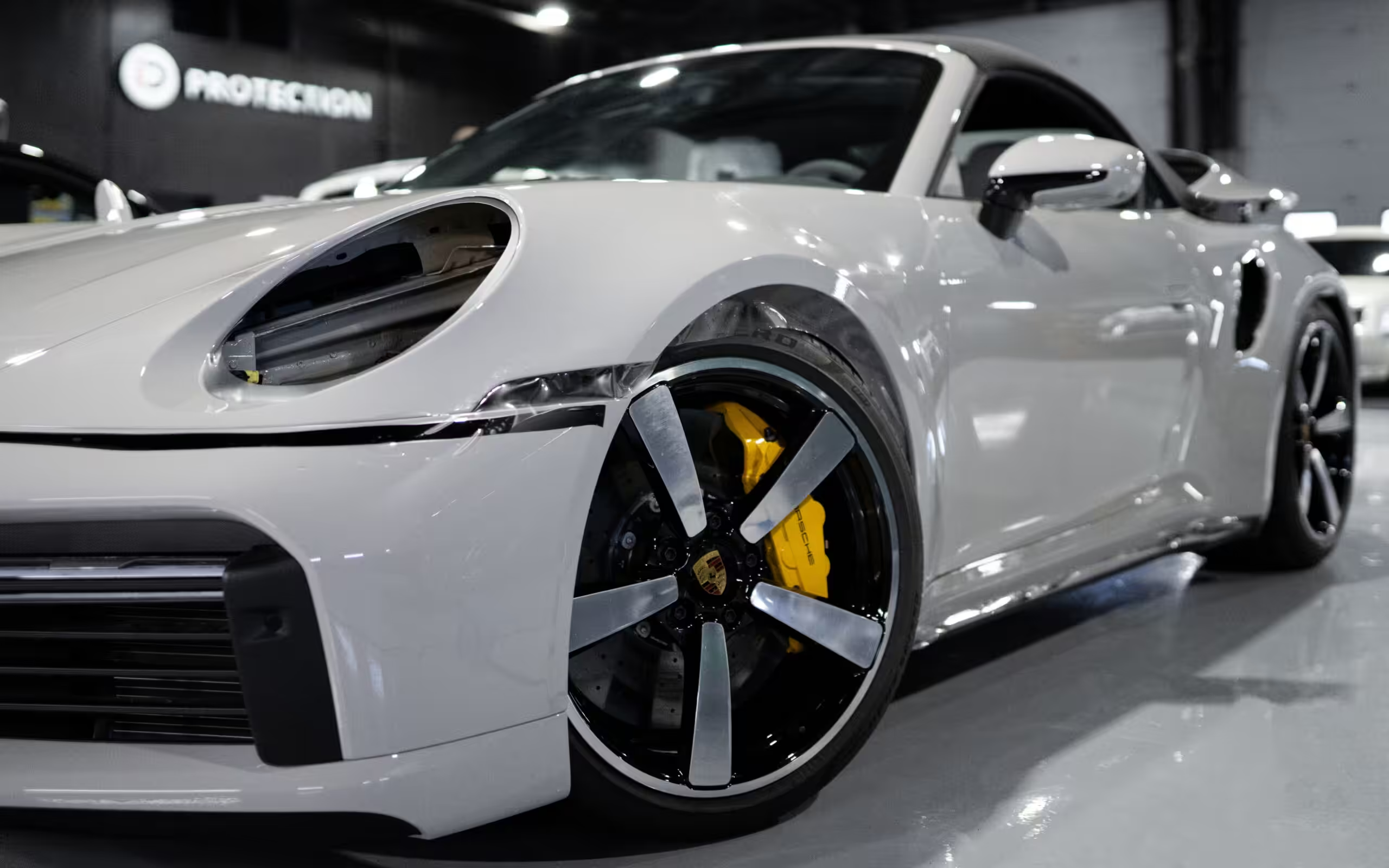
Hidden edges over pattern shortcuts. A pre-cut pattern does not have to mean visible lines across the car. Where we have the chance to hide the film inside a panel gap, we do, and on the panels that need it we custom cut on the car, cut with a small extra all around, and tuck the edge so you do not see where the film starts and stops. When we know a car well, we can pull a single piece over a fender without taking off the headlight. That craft, not the roll the film came off, is what separates a clean job from an obvious one.
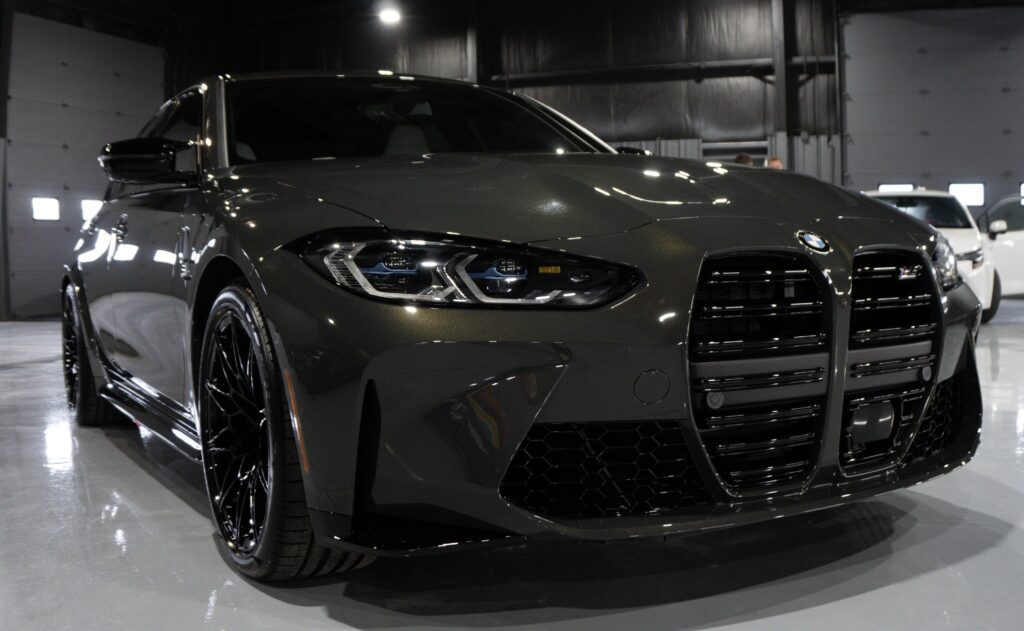
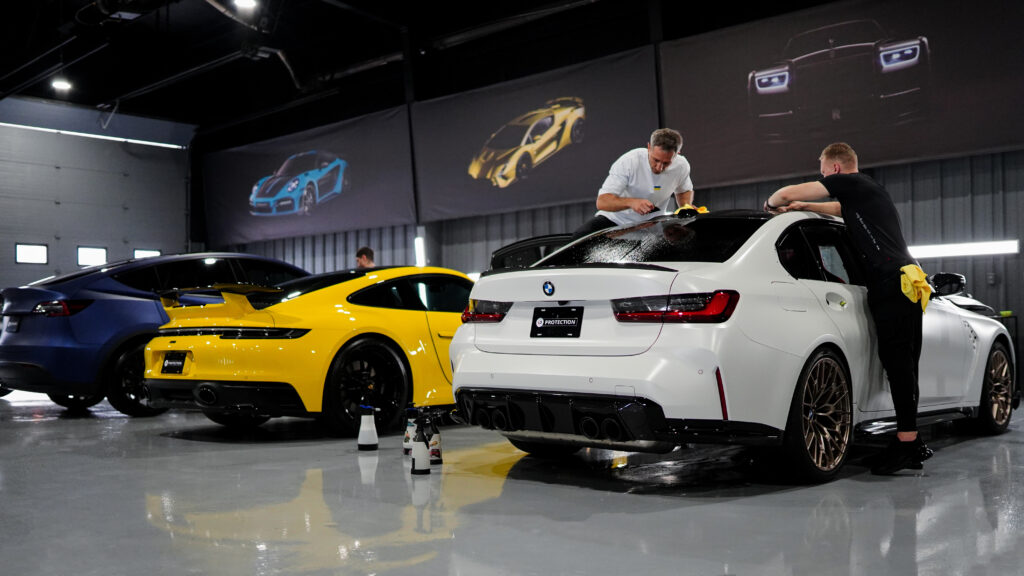
Volume on the hard cars. At ID Protection we wrap two or three Porsches a day and take on the full-body jobs on black and dark paint that a lot of shops turn away. Dark cars are unforgiving, so if a shop can make a black quarter panel look flawless, the ordinary daily driver is straightforward. That is the experience you are really buying when you weigh XPEL or 3M PPF against each other, because either film in trained hands beats the better film applied badly.
Honest coverage advice. On a black or dark car we will tell you it is full body or nothing. Protect only the front and in a couple of months the front looks perfect while the rest of the car picks up swirl marks, and on a clean car in the right light you see the contrast. We would rather say that up front than sell you a partial job you regret. Choosing between XPEL vs 3M paint protection film matters far less than choosing a studio that will give you that kind of straight answer.

What XPEL vs 3M PPF Costs in Toronto
Coverage drives the price far more than the brand does. How much of the car you wrap, the vehicle itself, and whether the job is pre-cut or fully custom cut move the number more than the badge on the film. As a rough guide, paint protection film in Toronto starts around $850 for a partial front, from $1,400 for a full front that covers the hood, fenders, bumper, mirrors and headlights, and from $4,500 for full-body coverage, with most jobs landing between those figures depending on the car. Comparing XPEL and 3M paint protection film on cost alone, XPEL usually runs a little higher than 3M for the same coverage, but that gap is small next to the swing between a partial front and a full body.
The takeaway on price is simple. Decide how much of the car you want protected first, then pick the film, because the coverage decision is the one that actually moves the invoice. A full front on a highway car is money well spent whether the film says XPEL or 3M on the box.
A Note on the Best PPF Brands
XPEL and 3M lead the category, and they are the two most drivers cross-shop, which is why XPEL vs 3M PPF is the comparison that comes up most. They are not the only good films, though. SunTek and STEK sit close behind and usually cost a little less, and any top-tier film installed well will protect the paint. If the shortlist grows beyond these two, the same rule holds: the film brand sets the floor, and the install sets the ceiling.
Frequently Asked Questions
Is XPEL or 3M PPF better?
Neither wins outright. XPEL Ultimate Plus and 3M Scotchgard Pro Series are both premium, self-healing films with a ten-year warranty, and the gap between them is small. XPEL carries a slight edge on clarity and healing reputation, 3M usually costs a little less and makes its warranty transferable. For most drivers the install quality decides the result more than the choice of film.
Is XPEL thicker than 3M?
No. XPEL Ultimate Plus is about 8 mil, and 3M Scotchgard Pro Series is in the same range, so the common belief that XPEL is the thicker film is a myth for everyday car film. XPEL’s much thicker Armor product is a textured off-road film, not the clear film used on street cars.
What is the warranty on XPEL vs 3M PPF?
Both are backed for ten years against yellowing, cracking, and bubbling. 3M states in its own warranty paperwork that the Scotchgard Pro Series coverage lasts ten years and transfers to a second owner, and XPEL warranties Ultimate Plus for the same span. Only 3M’s older or basic film lines carried the shorter five to seven year terms you may have read about.
Do both XPEL and 3M self-heal?
Yes. Both films use a heat-activated top coat that lets light swirl marks and fine scratches lift out on their own. We see it on the bench: once it is warmer than about 20 degrees outside, those light marks on the film disappear by themselves in the sun. A quick pass with warm water or a heat gun does the same thing on a cold day.
How much does PPF cost in Toronto?
Paint protection film in Toronto starts around $850 for a partial front, from $1,400 for a full front, and from $4,500 for full-body coverage. The exact price depends on how much of the car you cover, the vehicle, and whether the job is pre-cut or custom cut. XPEL usually costs a little more than 3M for the same coverage.
Should I get full front or full body PPF?
It depends on how you drive and how long you are keeping the car. A full front covers the panels that take almost all the highway stone chips, and it suits most drivers. On black or dark paint we often recommend full body, because a protected front against an unprotected rest of the car shows swirl marks and a visible contrast within a few months.
How long does PPF last?
Quality paint protection film lasts up to about ten years, in line with the manufacturer warranty, depending on the film, how the car is driven, and how it is cared for. A premium self-healing film holds its clarity and keeps taking chips and stains for that whole span. Highway and outdoor cars work the front film harder, but the film wears instead of the paint.
Does the installer matter more than the film brand?
For most drivers, yes. When XPEL and 3M paint protection film are this close on the specs, the install is what you actually live with: wrapped and hidden edges, no dust or lifted corners, and film tucked into the panel gaps. A top film applied poorly looks worse than a good film applied well, which is why the studio you pick matters more than the logo on the roll.
Key Takeaways
Both films are top tier. XPEL Ultimate Plus and 3M Scotchgard Pro Series are both about 8 mil, self-healing, clear, and warranted for ten years, so neither is a wrong choice.
The old myths are dead. XPEL is not thicker for street cars, 3M is not gloss only, and 3M’s Scotchgard Pro Series warranty now runs ten years and transfers to a second owner.
Coverage sets the price. How much of the car you wrap moves the number far more than the brand, and XPEL tends to cost a little more than 3M for the same coverage.
The install decides the result. With XPEL vs 3M paint protection film this evenly matched, wrapped and hidden edges, clean corners, and honest coverage advice are what separate a great job from an obvious one.
Choosing the Right Film and Studio
If you are stuck comparing XPEL and 3M paint protection film, the good news is that you cannot really lose on the film. Both are excellent, both self-heal, and both are warranted for a decade. Spend your energy on the coverage that fits how you drive and, more than anything, on the hands that will apply it. Whether you land on XPEL vs 3M paint protection film, the studio that installs it is what you live with. At ID Protection, we install premium, self-healing paint protection film for Toronto and GTA drivers, custom cut and wrapped so the edges stay hidden, and you are welcome to come see a job in progress before you decide.